3 liens privés
security-audit
A coding-agent skill that turns your agent into a security auditor. It orchestrates isolated agents through reconnaissance, coverage-led hunting, candidate validation, structured output, independent record verification, and target-neutral reporting.
This is the skill that seeded Cloudflare's vulnerability discovery harness, described in Build your own vulnerability harness. The harness grew into a multi-stage, fleet-wide system; this skill is the single-repo starting point it evolved from.

OmniVoice is a state-of-the-art massively multilingual zero-shot text-to-speech (TTS) model supporting over 600 languages. Built on a novel diffusion language model-style architecture, it generates high-quality speech with superior inference speed, supporting voice cloning and voice design.
'équipe Next-gen Kaldi de Xiaomi a sorti OmniVoice, un modèle de synthèse vocale qui parle 646 langues et qui est capable de "recopier" une voix à partir d'un extrait de huit secondes minimum. Et tout ça en local et gratuitement !
QR codes in seconds.
ente powered qr code generator, no bullshit
PostgreSQL for Everything
Pas encore impressionné ? OK, OK. Balance un peu de JS inline (direct dans l’HTML, espèce de puriste à la con) et t’as des dialogues natifs. Regarde bien : pas de build, pas de frameworks, juste du pouvoir brut.
Win11Debloat is a lightweight, easy to use PowerShell script that allows you to quickly declutter and customize your Windows experience, no installation required! You can use it to remove pre-installed apps, disable telemetry, remove intrusive interface elements and much more. No need to painstakingly go through all the settings yourself or remove apps one by one. Win11Debloat makes the process quick and easy!
Keep your Docker containers fresh, safely.
freshdock watches your running containers, notices when a newer image ships, and updates them health-gated. A broken update rolls back automatically instead of leaving you with a dead service. The maintained successor to the archived Watchtower.
Monitor
Your fleet.
A self-hosted control plane for Docker Compose fleets: deploy, coordinate, and recover across nodes without Kubernetes.
un skil pour faire des meilleurs requirements

une liste de biais cognitifs
A curated list of amazingly awesome Free and Open-Source sysadmin resources.

une alternative à typora ?
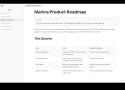
Write Markdown. Review with AI.
Markra keeps local files, rich text editing, and AI review in one calm desktop. Write naturally, keep Markdown underneath, and approve every AI change before it lands.

a database backup tool
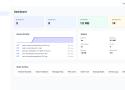
s3 garage minio alternative
virustotal alternative
gui to convert videos
webgpu inpainting
SQLite Is All You Need
JayJay
July 14, 2026
I read Prefer STRICT tables in SQLite by Evan Hahn last week, and it got me thinking. Here is someone treating SQLite as a database you put real, typed, production data into. Which raises the obvious question: how far does that actually go?
So we found out. We built a social network on SQLite, 50,000 users and a million posts in a single 343MB file, put it behind a Node API, made every table STRICT on Evan's advice, and hammered it until the numbers stopped being flattering. This post is what came back: the benchmarks, the config, the code, and the places it falls over.
Outils PDF
Sélectionnez un outil pour commencer

MapSCII - The Whole World In Your Console
DarkMoon est un projet libre de cybersécurité publié sous licence GNU GPLv3. Il propose un moteur de test d’intrusion automatisé, lancé en conteneur Docker, qui orchestre des outils de sécurité existants, des agents spécialisés et un modèle de langage configurable.
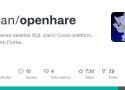
openhare is an AI-powered, cross-platform desktop SQL client with multi-database support, built for everyday development, data analysis, and DBA management workflows.

A minimalist, offline-first markdown note-taking app for macOS, Windows, and Linux.

Cadmium : la droite et l’extrême droite s’opposent à des mesures qui réduisent l’exposition de la population
Écologie –Santé environnementale
Enfants et adultes de France sont surexposés au cadmium. En cause, le laisser-faire de l’Etat qui autorise des seuils plus élevés qu’ailleurs en Europe. Un texte propose de réduire drastiquement la teneur en cadmium mais le RN s’y oppose.
LE RN VOTE CONTRE VOUS
Pourquoi cette campagne ?
Le Rassemblement National ment constamment aux français-es. Ce qu'ils disent faire ne se vérifie absolument pas dans leurs votes, et nombreux d'entre nous se font avoir par leurs discours bien huilés.
À l'heure où les médias télévisés ne relatent que des discours et des opinions, nous voulions remettre les faits au centre des décisions de chacun-e et montrer à toutes et tous que le RN n'agit pas dans votre intérêt. Le RN vote contre notre santé, contre les femmes, contre les personnes précaires, contre les personnes non blanches, contre les travailleurs et travailleuses, contre les demandeurs et demandeuses d'emploi, contre les personnes LGBT+, contre les malades, contre les agriculteurs et agricultrices, contre le vivant, contre l'écologie et contre la démocratie.
En soit, LE RN VOTE CONTRE TOUT LE MONDE.


A post-modern text editor.

Event Sourcing with Elixir
Today I learned
The pipe operator |> always passes the value as the first argument. But sometimes the function you want needs it somewhere else.
then/2 solves this by wrapping the call in an anonymous function so you can place the piped value in any slot via &1.
Example
"super-secret-token"
|> then(&:crypto.hash(:sha256, &1))
|> Base.encode16(case: :lower)
|> binary_part(0, 8)
Step by step:
- Start with a string.
:crypto.hash/2has signature (algorithm, data) — the data goes second, so we need then to slot our piped value into&1.- Hex-encode the resulting binary.
- Keep the first 8 chars as a short fingerprint.
Without then, writing "super-secret-token" |> :crypto.hash(:sha256) would expand to :crypto.hash("super-secret-token", :sha256) — arguments swapped, crash.
Think of then as an escape hatch: "pipe into this specific slot, not the default first one." Especially handy with Erlang stdlib calls (:crypto, :binary, :ets) whose signatures weren't designed pipe-first.

Travaillez Mieux, Pas Plus.
Gagnez du temps, puis trouvez votre format de semaine de 4 jours
parallel-rsync
Parallel rsync launcher with fancy progress bars.

LLMFit : Quel LLM faire tourner sur votre ordinateur ?
Contourner l’algorithme Youtube les fils RSS ?
grub windows
via https://korben.info/grub2win-multiboot-windows-linux.html

The free system maintenance suite your PC deserves.
15+ powerful tools to clean, optimize, and protect your Windows, macOS, and Linux machines. Open source, no ads, no bloatware. Just a faster computer.

Meshnetwork.fr : Communiquer sans internet ni opérateur, pour moins de 50 €
Run any GUI app in the terminal❗
via https://korben.info/term-everything-gui-terminal-linux.html
Complete Controller Testing
No software downloads required, just connect. Get real data on your controller's analog sticks, buttons, and vibration performance.
via https://korben.info/controllertest-io-suite-test-manettes.html
Markdown Architectural Decision Records part of ADR
“Markdown Architectural Decision Records” (MADR) [ˈmæɾɚ] – decisions that matter [ˈmæɾɚ].An Architectural Decision (AD) is a justified software design choice that addresses a functional or non-functional requirement of architectural significance. This decision is documented in an Architectural Decision Record (ADR), which details a single AD and its underlying rationale.
Open source voice cloning studio with support for multiple TTS engines. Clone any voice, generate natural speech, and compose multi-voice projects — all running locally.
ai token compression

maintenant
Monitor everything. Manage nothing.
Drop a single container. Your entire stack is monitored in seconds.
Configurez. Sécurisez. Déployez.
Tout depuis votre terminal.
Aucun service tiers. Aucune donnée envoyée. Votre serveur, vos clés, votre contrôle.
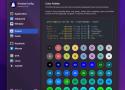
ghostty config tool

Greywall your agent & let it cook.
Container-free sandboxing with real-time observability & dynamic controls, for Linux & MacOS.
An Elixir Devcontainer for Phoenix, Claude Code, and Tidewave