3 liens privés
Phoenix LiveView Calendar with Drag-and-Drop

When you're selling stuff, every click away from your website is a potential lost sale. Customers kept asking us to allow people to buy tickets without leaving their branded site. They loved the service, but wanted to retain brand presence and coherence.
The ask seemed simple enough. Drop a widget on any webpage, show some events, let people check out. But as we dug into it, the technical challenges started stacking up. How do you maintain cart state across page refreshes? How do you track marketing attribution when the purchase happens on someone else's domain? And how do you process payments securely in what is essentially a third party context?
This is the quick post of how we tried a bunch of approaches, hit walls, and eventually landed on Phoenix Channels as our solution.
Asynchronous Tasks and Streaming UIs in Phoenix Liveview

The Top 3 LiveView Form Mistakes (And How to Fix Them)
John Curran •
November 07, 2025
I’ve been writing LiveView since 2020. In that time, I’ve seen the same three form mistakes at multiple companies. Here’s what they are and how to fix them.
-
Slow, laggy forms with scattered logic because form state gets stored in socket assigns and server round-trips get used for dynamic UI (conditional inputs, toggles), instead of keeping that state in hidden form inputs where it belongs.
-
Brittle system where UI and database can’t evolve independently because database schemas get used directly for forms, coupling persistence logic to presentation.
-
Users stuck with valid data but can’t submit because changesets get manually manipulated with Map.put or Map.merge instead of Ecto.Changeset functions, leaving stale errors behind.
The common thread: don’t fight the framework. Keep form state on the client, create embedded schemas for your forms, and use Ecto.Changeset functions to modify changesets.
Soothing pastel theme for the high-spirited!
A community-driven color scheme meant for coding, designing, and much more!

TermUI
Hex.pm Docs License
A direct-mode Terminal UI framework for Elixir/BEAM, inspired by BubbleTea (Go) and Ratatui (Rust).
TermUI leverages BEAM's unique strengths—fault tolerance, actor model, hot code reloading—to build robust terminal applications using The Elm Architecture.
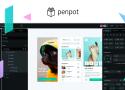
Penpot is the first open-source design tool for design and code collaboration. Designers can create stunning designs, interactive prototypes, design systems at scale, while developers enjoy ready-to-use code and make their workflow easy and fast. And all of this with no handoff drama.
Available on browser or self-hosted, Penpot works with open standards like SVG, CSS, HTML and JSON, and it’s free!
Macroquad
Simple and easy to use game library for Rust programming language.
HTML5
First class browsers support, WebGL1 and iOS Safari supported.
Android
Single command docker-powered android builds.
iOS
Export to XCode project for iOS.
PC
Linux/Mac/Windows with no external system dependencies.
Batteries included
UI, efficient 2D rendering, sound system—everything needed to make a 2D game included!
Build powerful data tables that scale to millions of records
A Phoenix LiveView library for creating responsive, sortable, filterable tables with real-time updates and enterprise-grade performance.