3 liens privés
security-audit
A coding-agent skill that turns your agent into a security auditor. It orchestrates isolated agents through reconnaissance, coverage-led hunting, candidate validation, structured output, independent record verification, and target-neutral reporting.
This is the skill that seeded Cloudflare's vulnerability discovery harness, described in Build your own vulnerability harness. The harness grew into a multi-stage, fleet-wide system; this skill is the single-repo starting point it evolved from.

OmniVoice is a state-of-the-art massively multilingual zero-shot text-to-speech (TTS) model supporting over 600 languages. Built on a novel diffusion language model-style architecture, it generates high-quality speech with superior inference speed, supporting voice cloning and voice design.
'équipe Next-gen Kaldi de Xiaomi a sorti OmniVoice, un modèle de synthèse vocale qui parle 646 langues et qui est capable de "recopier" une voix à partir d'un extrait de huit secondes minimum. Et tout ça en local et gratuitement !
QR codes in seconds.
ente powered qr code generator, no bullshit
PostgreSQL for Everything
Pas encore impressionné ? OK, OK. Balance un peu de JS inline (direct dans l’HTML, espèce de puriste à la con) et t’as des dialogues natifs. Regarde bien : pas de build, pas de frameworks, juste du pouvoir brut.
Win11Debloat is a lightweight, easy to use PowerShell script that allows you to quickly declutter and customize your Windows experience, no installation required! You can use it to remove pre-installed apps, disable telemetry, remove intrusive interface elements and much more. No need to painstakingly go through all the settings yourself or remove apps one by one. Win11Debloat makes the process quick and easy!
Keep your Docker containers fresh, safely.
freshdock watches your running containers, notices when a newer image ships, and updates them health-gated. A broken update rolls back automatically instead of leaving you with a dead service. The maintained successor to the archived Watchtower.
Monitor
Your fleet.
A self-hosted control plane for Docker Compose fleets: deploy, coordinate, and recover across nodes without Kubernetes.
un skil pour faire des meilleurs requirements

une liste de biais cognitifs
A curated list of amazingly awesome Free and Open-Source sysadmin resources.

une alternative à typora ?
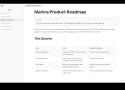
Write Markdown. Review with AI.
Markra keeps local files, rich text editing, and AI review in one calm desktop. Write naturally, keep Markdown underneath, and approve every AI change before it lands.

a database backup tool

s3 garage minio alternative
virustotal alternative
gui to convert videos
webgpu inpainting

SQLite Is All You Need
JayJay
July 14, 2026
I read Prefer STRICT tables in SQLite by Evan Hahn last week, and it got me thinking. Here is someone treating SQLite as a database you put real, typed, production data into. Which raises the obvious question: how far does that actually go?
So we found out. We built a social network on SQLite, 50,000 users and a million posts in a single 343MB file, put it behind a Node API, made every table STRICT on Evan's advice, and hammered it until the numbers stopped being flattering. This post is what came back: the benchmarks, the config, the code, and the places it falls over.